
By Michael Patrick O’Brien–

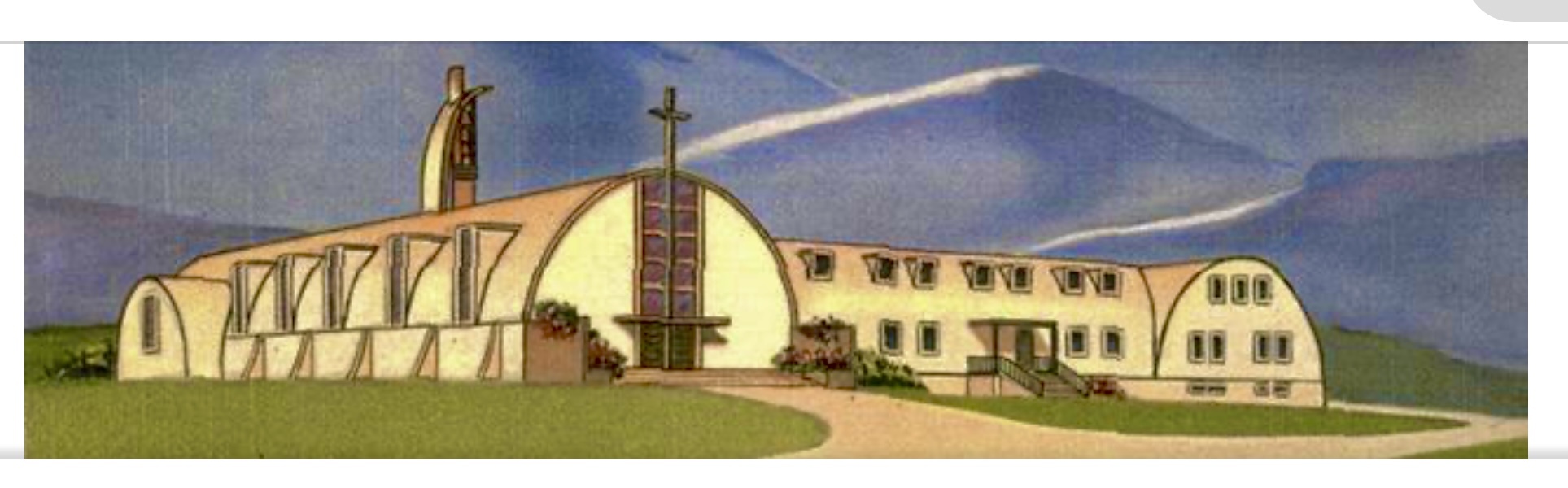
Listening to a friend’s recent presentation about Utah’s Carmelite monastery—the only monastery left in the state—evoked a wave of memories about Carmelites and my own family.
Like me, the presenter—Kim Hancey Duffy—had many friends at the now-closed Trappist monastery for men in Huntsville in Northern Utah. Kim’s recent lecture for the Holladay Historical Commission about the Utah Carmelites was interesting, informative, and insightful.
Carmelites trace their origins to hermits who in 1209 lived on Mount Carmel in Northern Israel, The religious order has produced several Catholic saints, including Teresa of Avila, John of the Cross, and Therese of Lisieux, also known as the “Little Flower of Jesus.”
St. Teresa reformed the order in 1562, and they became known as the Discalced (barefoot or unshod) Carmelites because they wore sandals instead of shoes. Carmelites from Belgium started the first American monastery in 1790 near Baltimore.
At the invitation of local Bishop Duane G. Hunt, a Carmelite monastery in California sent five women to Utah to start the new foundation. The nuns arrived in Salt Lake City in December 1952—seventy-five years ago next year.
The nuns lived for four years in a rickety house located at 10th East and Second South in Salt Lake before buying another large home in what then was a secluded and rural area, now known as Holladay. The Carmel of the Immaculate Heart of Mary is there still today, just a few blocks from where I live.
One of the founders was Lurleen Romney Cheney, known as Sister Mary Catherine. A sister of Latter-day Saint apostle Marion George Romney and a cousin to former Utah Senator Mitt Romney, Lurleen converted to Catholicism after a divorce and joined the Carmelites after raising her children.
She was born in 1900 to Mormon families who had fled to Mexico to avoid prosecution under laws prohibiting the practice of plural marriage. Lurleen and her family later endured a harrowing escape back to the United States during the Mexican Revolution led by Pancho Villa.
One of the best known of the local Carmelites, Sister Mary Joseph (Barbara Whipperman), also converted from The Church of Jesus Christ of Latter-day Saints after meeting Sister Mary Catherine Romney. As the “outside” sister for many years, Mary Joseph took care of her community’s business needs and organized the popular Carmelite Fair held each September at the Holladay monastery.
Another founder was Sister Margaret Mary (Roseanne Margaret Miller), who passed away in 2025 after 80 years in the religious life. She was only 25 years old when she came to Utah but never left, and for a time was the leader of the local sisters.
Today, eleven Carmelites live secluded in the Utah monastery, devoted to prayer and manual labor…and silence. Every day they pray for all of us, care for the grounds and gardens of their convent, and make altar bread for local Catholic parishes.
Over the years, we attended/supported their fair, and our children helped clean up afterwards as part of their Judge Memorial Catholic High School service projects. When I sold some of my Monastery Mornings books at our parish Christmas Boutique a few years ago, my wife reinvested the profits in the Carmelites’ delicious peanut brittle sold right next door.
My father Kevin O’Brien was not much of a religious man, but I recall that he seemed to be interested in the Carmelites. On occasion, he even did volunteer work at their convent.
I figured out why when I got a little older.
In 1952—the same year that Carmelites arrived in Utah—my father’s older sister (and my aunt) Maureen Therese O’Brien took final vows at the Carmelite Monastery of St. Teresa and St. John of the Cross located in Wheeling, West Virginia.
Maureen was born in New Rochelle, New York in 1923, the third of seven O’Brien children. After graduating in 1946 from St. Vincent’s College in Riverdale, New York, she taught school for a short time but then joined the Carmelites and took on the name “Christine.”
In a September 1990 interview with a reporter from the Pennsylvania Press Enterprise newspaper, Sister Christine described her call to the cloistered life. “[M]y grandmother in Vermont had been praying for a priest in the family. And of course, we were the only grandchildren that she had, because she only had one son. It was nearing the time of my solemn profession that I realized that her prayers had been answered and that I was the one.”
Although my aunt lived a very secluded life, our family did get occasional cards and letters from her and the return address always used her full title “Sister Christine of God.” As a boy, I remember thinking that if you had to use an “of” in your name, it would hard to find one more impressive than my aunt’s of.
I only met Sister Christine once, at my father’s funeral in Utah in 1991. I read later, however, about her many accomplishments.
The local Catholic bishop presided at the 1952 Mass where she took vows. She spent the next six decades in the religious life, successfully navigating that unique world both before and after the many changes made in the 1960s during the Second Vatican Council.
Sister Christine was active in the national leadership council of both United States and International Carmelites and was a keynote speaker at the order’s American bicentennial observation in Baltimore in 1990. She had close friendships with fellow Carmelites in Ireland, England, Holland, and Germany.
She held lots of jobs at her monastery and eventually, her sisters elected her as the leader of the Wheeling convent. When their numbers declined, she led them in a merger with, and move to, another Carmelite monastery—the Carmel of Jesus Mary and Joseph—in Elysburg in central Pennsylvania.
The September 1990 Press Enterprise news article described the Pennsylvania convent as “secluded on a peaceful hillside thick with pine and hemlock and roving herds of deer.” Sister Christine’s colleagues elected her as the leader in Elysburg too, and she lived at the lovely abbey until she died in 2007.
I never got to talk to her about her vocation or the intended purpose of her quiet life, but she answered those sorts of questions for me indirectly, in the September 1990 article about her Carmelite monastery. When he was just about the same age I am now, she explained, “Our presence here is hopefully witness to others of the transcendent nature of life. The spiritual life.”
She also told The Danville News in August 1990 that there was a growing need “among persons of all religions” to develop the “contemplative dimension of their faith and spirituality” to “give meaning to their lives in our technological age.”
I can almost hear her religious sisters at the Utah Carmelite monastery nodding in silent agreement.
(Photo: Sister Christine from September 1990 interview with the Pennsylvania Press Enterprise newspaper.)
*Mike O’Brien (author website here) is a writer and attorney living in Salt Lake City, Utah. Paraclete Press published his book Monastery Mornings, about growing up with the monks at the old Trappist monastery in Huntsville, Utah, in August 2021. The League of Utah Writers chose it as the best non-fiction book of 2022. Mike’s new holiday novel, tentatively titled “The Merry Matchmaker Monks,” will be published in time for Christmas 2026.
