
By Michael Patrick O’Brien–

Each autumn, my Jewish friends observe the High Holy Days by blowing a ram’s horn called a shofar, celebrating a new year during Rosh Hashanah, and solemnly seeking atonement on Yom Kippur. One of my Catholic friends—a Trappist monk—sometimes does it with them.
Father David Altman is a Utah transplant. He was born in 1938 in Philadelphia to a Jewish family, studied accounting at Temple University, and eventually moved across country to Los Angeles, California where he worked as a government auditor.
On his journey to joining the Catholic Church in 1959, David read Thomas Merton’s autobiography The Seven Storey Mountain and felt drawn to the monastic life. “It became an insistent question that I had to answer for my own peace and happiness,” he told a Salt Lake Tribune news reporter in 2007.
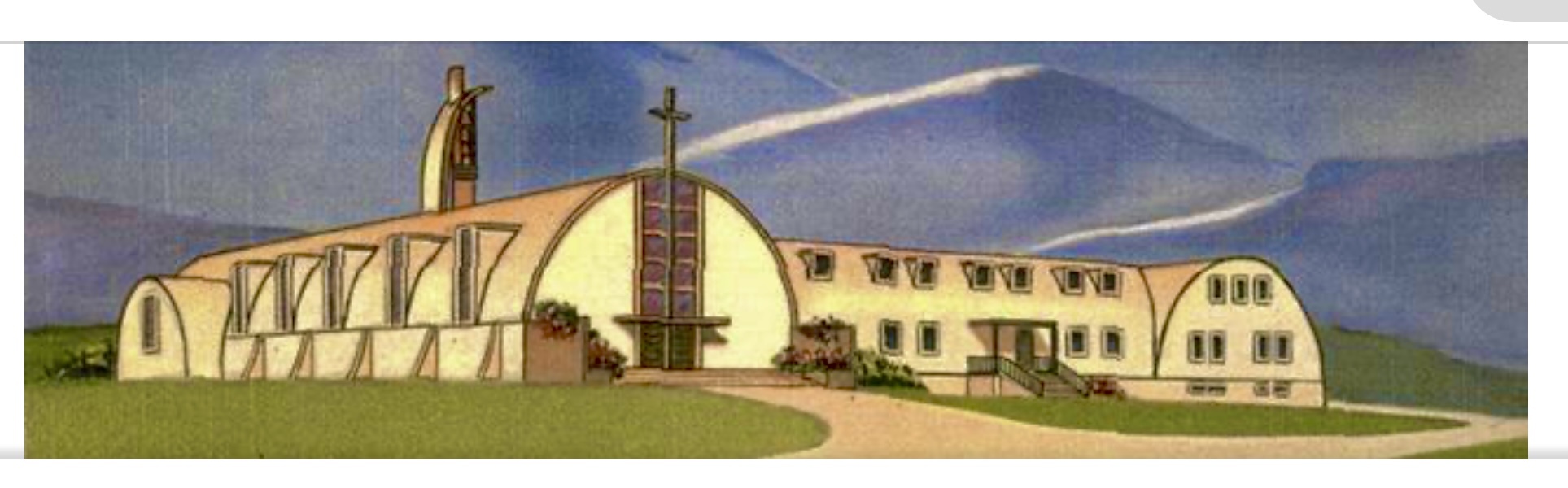
David answered that question by paying off his student debts and joining the monastery near Huntsville in Northern Utah six decades ago in 1966. He started his monastic life as Brother David, taking final vows in 1973.
David’s affection for Thomas Merton was not uncommon among the Trappists. Given the new Catholic monk’s Jewish background, however, it was intriguing and perhaps even foretelling.
Merton’s good friend was the Jewish scholar Abraham Heschel. The Kentucky Trappist monk wrote Rabbi Abraham and criticized the contempt toward Jewish people within Christian history.
Merton also saw the Jewish High Holidays as a model for Christians for inner transformation. He told his good friend the rabbi that to endure his own personal suffering, and yet persist, made Merton feel like “a true Jew under my Catholic skin.”
Father David also endured the challenges of his new vocation—including arduous manual labor in the abbey hayfields—with patience…and with wit. He once told The Intermountain Catholic newspaper that he made the transition from outside life to monastic life the same way that a flea eats an elephant—“one bite at a time.”
He studied for the priesthood for several years. The local bishop ordained him at the abbey on September 29, 1979, while I watched from the church balcony.
With his accounting background, Father David served as the monks’ treasurer for 25 years. He also was the last elected monastery abbot (leader) in 2007 and wrote many thoughtful and inspiring homilies for his brothers.
I think that his favorite monastic jobs, however, were the ones that connected him with those of us in the outside world.
My family met him in the 1970s when he locked the abbey church up each night after the evening prayers called compline. I wrote about him, and shared other Utah monk stories, in my 2021 book Monastery Mornings: My Unusual Boyhood Among the Saints and Monks.
Father David also delivered fresh monastery eggs, bread, and honey to local businesses. He collected the mail each day. And he gave tours and monk-talks to all sorts of groups visiting the abbey.
Perhaps while doing one of those outward-looking jobs, Father David met the Utah Jewish Zippel family.
Rabbi Benny Zippel was born and raised in Italy. Rabbi Zippel, his wife Sharonne (from Toronto, Canada), and their young son Avremi (also now an adult and a rabbi), came to Salt Lake City in 1992.
The Salt Lake Tribune has reported that the Zippels were among 4,500 “emissary families” sent out globally by the late Rebbe Menachem Schneerson to found new communities for the Orthodox Jewish Hasidic movement based in Crown Heights, New York.
The Zippels started the Chabad Lubovitch of Utah, which just a few years ago celebrated three decades here. Although quite proactive in serving the Jewish community, Rabbi Zippel also articulated and pursued a broader mission: “Every single individual, man, woman, child or senior…has an inherited meaning and purpose to reveal godliness in this world.”
From what I have read, the Jewish festival called Sukkot (also known as the Feast of Booths or the Feast of Tabernacles) is in the middle of the high holiday season. God wanted the Israelites to observe this festival by living in temporary shelters as a reminder that when their ancestors were in the wilderness, God provided them with booths as dwellings.
To help celebrate the joy and fragility of Sukkot, Rabbi Zippel built a mobile sukkah (a temporary shelter with a roof made from cut vegetation). He has taken it all over Utah.
“Wherever we are, we build booths, and we partake of our meals in these booths,” Zippel has said, explaining a tradition of Sukkot. “Every year, we build one on wheels because we believe very strongly that people who don’t have a Sukkah in their homes should have the possibility to experience one.”
One of those places without a Sukkah was the old Huntsville Trappist monastery where Father David lived until 2017. On a couple of occasions, beneath the autumn-colored trees that surrounded the abbey parking lot, the rabbi and the monk celebrated Sukkot together in the booth on wheels.
Someone captured the poignant moment with the photo accompanying this blog.
I am not exactly sure what Father David and Rabbi Zippel did in the mobile Sukkah, but a typical Sukkot prayer is: “May my thoughts be holy, in token of the abundance of blessing that is mine from heaven and earth. With these four species I reach out to the Source of all Life, whose Presence is with us in all directions and all ways.” During the blessing, participants wave a lulav, etrog, hadass, and aravah bundle (branches of palm, myrtle, willow, and citrus) in six directions to symbolize God’s omnipresence throughout the entire universe.
Father David has told me he is quite grateful that the Zippels help him remember and honor his Jewish roots.
I suspect Rabbi Zippel and his family appreciate the unique interfaith connection too. They have maintained it since Father David moved from the now-closed abbey to the St. Joseph’s Villa retirement home in Salt Lake City, where the old Trappist is the last surviving Utah monk.
One recent year, near Yom Kippur, Rabbi Zippel posted a photo (see above) of him at the Villa helping Father David wear the Tefillin. The distinctive prayer aid has leather straps that hold small boxes with scripture scrolls inside—a physical and spiritual reminder of God’s presence.
With obvious affection, the Utah rabbi wrote this about that lovely moment: “Yom Kippur is a time for homecoming for every Jewish soul, no matter who, no matter what, no matter where, no matter how. Cherishing the privilege of putting on Tefillin just now with a retired Trappist monk. No matter where you may roam you can always come back home.”
The oldest (and arguably most overused) opening line for a joke mentions something about a rabbi and a priest going somewhere or doing something together. The lovely photos of Father David and Rabbi Zippel together during the High Holy Days, however, are a source of inspiration instead of humor.
In our divided and often-hateful world, it is intensely uplifting to know that an old Trappist monk—just like his favorite writer named Merton—from time to time takes a moment to find and nurture the Jew under his Catholic skin.
*Mike O’Brien (author website here) is a writer and attorney living in Salt Lake City, Utah. Paraclete Press published his book Monastery Mornings, about growing up with the monks at the old Trappist monastery in Huntsville, Utah, in August 2021. The League of Utah Writers chose it as the best non-fiction book of 2022. Mike’s new holiday novel, tentatively titled “The Merry Matchmaker Monks,” will be published in time for a future fun Christmas read.
