
By Michael Patrick O’Brien–

The things that make for frightmares this time of year lacked the same chilling effect at the old Trappist monastery in Northern Utah where I spent many boyhood days. There was, however, one exception.
My family started visiting the abbey in the early 1970s after my parents divorced. It was a difficult time.
My mother sought peace and quiet during one of the most traumatic moments of her life. The monks provided both, in abundance.
They were welcoming, nonjudgmental, and contemplative. You felt your blood pressure drop the moment you entered the monastery gates.
Yet, especially for a young boy like me, the old monastery also featured many things that could scare the hell out of you.
There was lots of darkness.
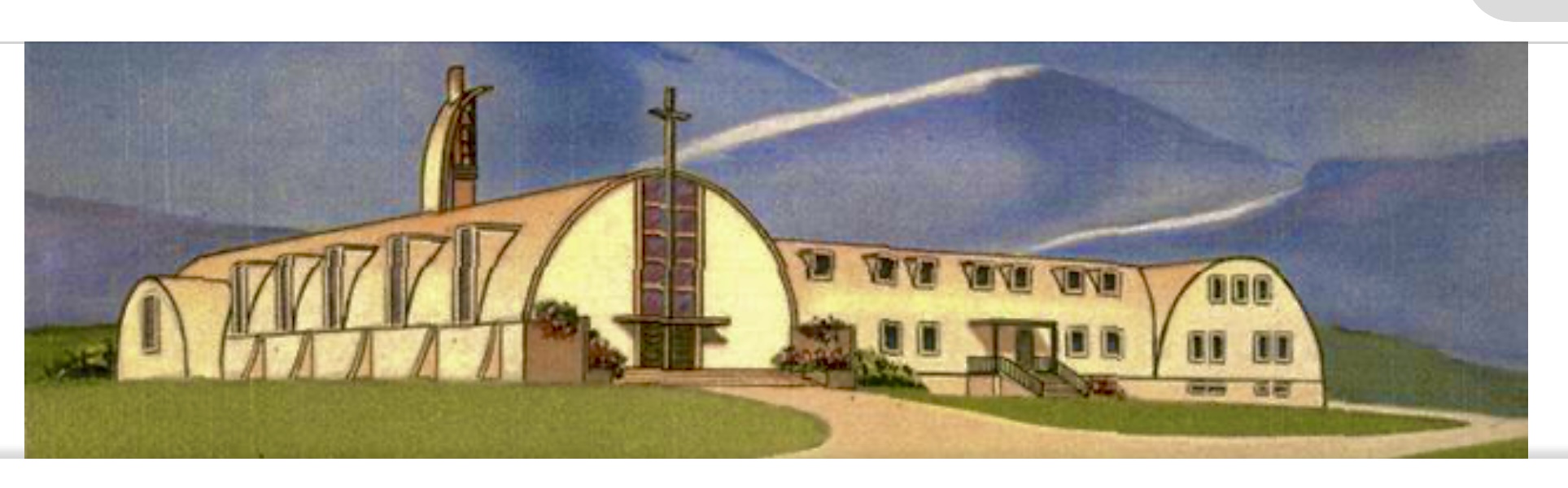
The monastery building sat in the center of a large ranch in the middle of an isolated rural valley near the foothills of towering mountains. Especially in the fall and winter, the monks kept the lights off in their Quonset hut church except when they chanted seven times a day.
The monks embraced what they called the night watch. Their early morning prayer, anticipating the dawn, was a living symbolic ritual of the watch and hope for eternal life.
Perhaps that’s why the dark and silent chapel never bothered me much too much. In Monastery Mornings, my 2021 book about the monks, I recalled a most memorable moment in that darkness when I perched on a heating vent.
“I sat there, eagerly anticipating. All at once, almost miraculously, hot air began to flow out of the vent slats. I was warm, deliriously and deliciously warm. I sat there for several minutes, under the stairs, in the dark, staring at a solo candle burning on a nearby altar. My head grew heavy and my body light. My soul seemed to levitate, and I experienced what may have been a deep mystical feeling. Or perhaps I just dozed off for a few minutes. Either way, it was divine.”
There was death at the abbey too, which also is frightening.
The monks planted their dearly departed, without a coffin, in a small quaint cemetery adjoining their church. Under normal circumstances, a dark graveyard marked by crooked crosses and surrounded by an old wooden fence can be off-putting.
I snuck in to visit whenever I could, perhaps because I heard the monks say so often—especially at their memorable burial ceremonies— that death was a beginning instead of an end. I wanted to know more about that beginning.
No monk ghosts ever challenged me during my visits. Yet, if it had happened, it likely would have been the young brother who lost his life to the horns of an angry bull named Madcap right on the abbey property.
That’s the sort of traumatic departure that might make someone want to haunt a place. If the gored monk ever did that, however, I missed it.
There was lots of wildlife at the abbey too.
Nestled as it was in a mountain valley, the monks had many non-human visitors. Generally, they all got on well together, although my friend Bill White (who owns the monastery land now) tells a great story about his rather unpleasant encounter with a badger.
Elk, deer, bears, bobcats, mountain lions, porcupines, skunks, racoons, sandhill cranes, and owls also visited the monastery. So did bats.
Which brings me to the one exception I mentioned earlier. The only time I remember an O’Brien family member being terrified at the old abbey involved a bat.
There are over a dozen different kinds of bats that make their home in Utah. Several live in the Ogden Valley surrounding the monastery.
My mother would often attend early morning mass at the abbey. One day, a curious (and perhaps spiritually hungry) bat joined her.
Bats could access the monastery chapel in several ways. The monks had a tall belfry with a large opening at the top. In warmer months, they cooled their abbey with open windows, some without screens.
On the day in question, Mom was at peace, praying and attending mass from the monastery church balcony. Suddenly, she spotted the unexpected visitor soaring around the sanctuary.
Although she loved all creatures great and small, Mom had to work extra hard to do this with bats. So, she watched in mounting horror as the skilled flyer started dive-bombing the monks while they chanted.
The same phenomenon must have happened there before. Mom said the monks seemed rather calm and detached about the whole thing.
They continued singing nonchalantly. The monks reacted—slightly with a small duck of the head—only if the winged intruder got within a few feet.
Perhaps discouraged by the lack of reaction it got from the Trappists, the intrepid bat spotted my mother on the balcony and changed course. She later reported to me that when it divebombed her, she divebombed the hard tile floor.
There were no vampire bats at the abbey, of course, so I asked her why she was so concerned that she felt the need to make the undignified dive. Her answer made sense.
Mom wore her hair up, largely on the top of her head, in what back then was called a “French Twist.” She was convinced the predatory bat was looking to nest in her hair.
Regardless of personal dignity or church decorum, that was just not going to happen.
Afterwards, Mom warned some of her monk friends that—despite the contemplative atmosphere or the rule of monastic silence—if the bat had gotten any closer, they would have heard her shrieks.
It’s the only time an O’Brien was ever frightened at the old abbey. And the bat made its mark.
Mom kept going to early morning mass at the monastery. Thereafter, however, whenever she lifted her eyes to the heavens, she was a bit more wary, and she wasn’t always seeking divine guidance.
(Illustration by Erin O’Brien.)
*Mike O’Brien (author website here) is a writer and attorney living in Salt Lake City, Utah. Paraclete Press published his book Monastery Mornings, about growing up with the monks at the old Trappist monastery in Huntsville, Utah, in August 2021. The League of Utah Writers chose it as the best non-fiction book of 2022. Mike’s new holiday novel, tentatively titled “The Merry Matchmaker Monks,” will be published in time for a future fun Christmas read.
