
By Michael Patrick O’Brien–

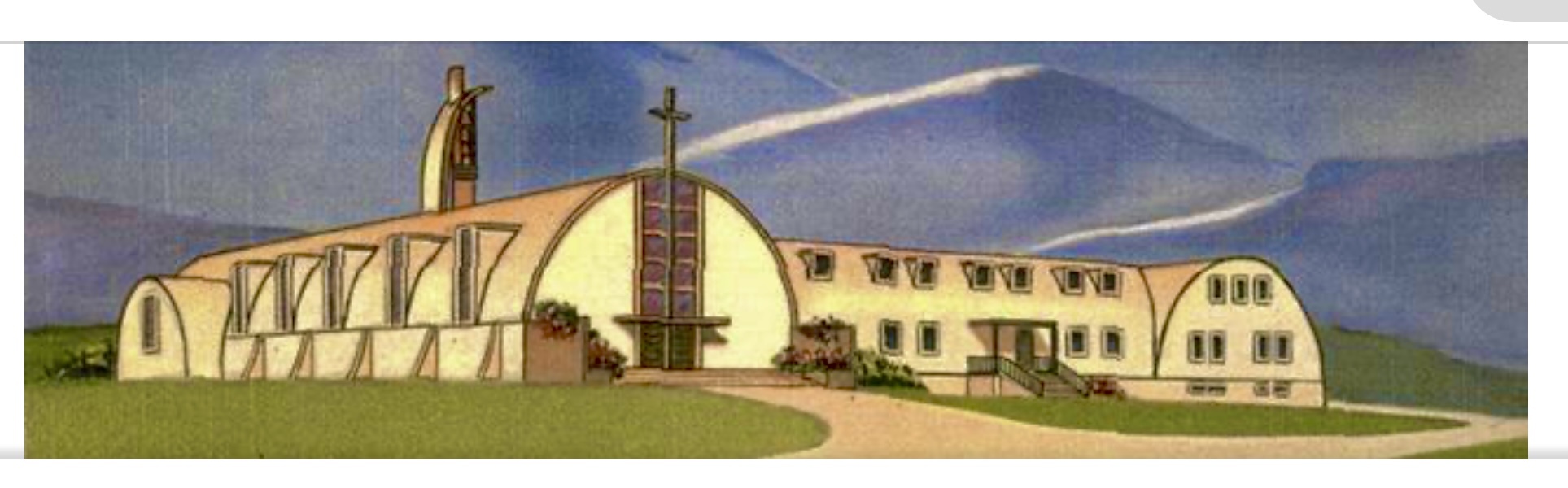
Each year July 10 marked the annual anniversary of the founding of Holy Trinity Abbey, the now-closed Trappist monastery in Huntsville in Northern Utah. For as long as I knew them, the monks always celebrated with a picnic featuring Kentucky Fried Chicken, to honor their roots at Gethsemani Abbey in Kentucky.
But each Founders Day, the Trappists also reflected on who they were and where they had been. That’s what I’m doing for my old friends the monks on this July 10, in 2026, on what would have been their 79th anniversary.
And to do it, I am recalling the words of one of their own, the last abbey leader Fr. Brendan Freeman. In a homily he gave at Holy Trinity Abbey in 2014 at a Mass honoring the founders of their order (aka the Cistercians), Fr. Brendan reminded the Utah monks that they were called to love the brethren and love the place.
It’s always been one of my favorite descriptions of a monk. Here is what Fr. Brendan preached…
***
There was a time, in the early 70s, when it was common in monastic circles to ask, “What is a monk?” Right after Vatican two there was a lot of uncertainty in the monastic life in general, so much so that the General Chapter thought it necessary to publish a document of only a few paragraphs entitled, “Declaration on the Cistercian Life” and a companion piece called, “Document on Unity and Pluralism.” These documents were meant to express the essentials of our life. Nonetheless, people—including monks—kept asking what is a monk? It got so bad that an acceptable answer was: A monk is someone who asks what is a monk! And so life went on.
Here is an answer to our question taken from one of the earliest documents of our founders, The Charter of Charity. Here a Cistercian monk is described as someone who is a lover of the brethren and of the place. This is how [founder] St. Stephen Harding described [fellow founder] St. Alberic.
Now place is extremely important to us; when we are born we are given a place in the family which means a place at the family table, a place to sleep, etc. When we start school we are given a place in a classroom, when we graduate we have a place to work. Place is important in monastic life also. Remember the Book of Regulations had a chapter on the Regular Places. When we join a monastery we are given a place in choir, a place in the refectory, a place called a cell to read and pray and sleep in, a place in the chapter room. One of the prerequisites of all these places is that they are secure. No one can arbitrarily take them from us. If you are 30 years old and still living with your parents, they might hint that it is time to have a place of your own but most likely they would not kick us out.
The first Cistercians were said to have gone to a place called Citeaux because it was remote, in fact in the early documents the author borrows from Deuteronomy in describing Citeaux as, and I quote, “a place of horror and vast solitude” (Deut. 32:10). Another translation has it as “a wasteland of howling desert” Our founders transformed this howling desert into a garden of Paradise; a place where the monk gradually regained his image of God. The names they gave to their monasteries bears out their love of the place: Bellefountain (beautiful fountain); Aiguebelle (beautiful waters); Mellifont (sweet fountain ); and, of course. St. Bernard’s monastery, Clairvaux (valley of light). I have visited all the monasteries of the U.S. Region and without a doubt your setting in the Ogden Valley surrounded by mountains is one of the most beautiful — a true Cistercian site.
But no matter how beautiful the place and no matter how much we love it we know our true homeland is in heaven. The Psalms are a wonderful reminder of this in so many passages about the passing of time and how our life is over like a sigh, or our days are like grass that withers by evening.
Lovers of the place and of the brethren. This, of course, is more important than being lovers of the place. Our first reading addresses this fact, “you must not exact vengeance, nor must your bear a grudge…you must love your neighbor…” (Lev. 19:17-18.) This reading is addressed to the community of Israel. The founding of Citeaux was a community effort; there were 21 monks who left Molesme. Robert and Alberic and Stephen are named founders but all the monks were founders. Isaac of Stella has a wonderful homily on community life. In it he asks the question, “why, brothers are we so little concerned to seek one another’s well-being, why can I not patiently bear the weaknesses I see in my brother which, out of necessity or because of physical or moral weakness cannot be corrected. This is indeed the law of Christ who truly bore our weaknesses in his passion and carried our sorrow out of pity, loving those he carried and carrying those he loved.” (5th week of ordinary time Saturday, Breviary Office of Readings.)
It is relatively easy to be a lover of the place, but to carry each other’s burdens and be concerned about the well-being of our brothers in community is not easy, especially in this age of individualism. We are trained to be independent and not to depend on others. (I have a brother in law who says he raised his kids to be independent and succeeded beyond his wildest expectations.)
Community living is called, in monastic jargon, the common life. Living in common and sharing with others is not easy but it is what we are called to do. It is our vocation and a way to imitate Christ who lived with a community of disciples. These disciples tested Jesus’ patience. They did not understand many of his parables; at a most inopportune time two asked for seats at his right and left missing his point of coming to serve and not to be served; one betrayed him resulting in his death and Peter denied even knowing him and all but one ran from him when he was dying on the cross. These were his chosen ones just as we are his chosen ones. Forgiveness is the hallmark of the Christian life and of our Cistercian life. Forgiveness makes community life possible. Without it there is no Christian community.
So let us be true Cistercians by being lovers of the place and above all, of the brethren.
***
I think what I like so much about monks is that they so often give me some pretty helpful advice about how we non-monks could…and should…live better too. Imagine how much better the world might be if, as described by Fr. Brendan, we just had a few more lovers of the place and lovers of the brethren.
*Mike O’Brien (author website here) is a writer and attorney living in Salt Lake City, Utah. Paraclete Press published his book Monastery Mornings, about growing up with the monks at the old Trappist monastery in Huntsville, Utah, in August 2021. The League of Utah Writers chose it as the best non-fiction book of 2022. Mike’s new holiday novel, tentatively titled “The Merry Matchmaker Monks,” will be published in time for Christmas 2026.

Wonderful story Michael, as usual. Founders Day was special but rough on the pescatarian digestive system. Between KFC and two cheeseburgers, it took me two unlamented days to fully recover. An annual cautionary tale on the sin of Gluttony perhaps?
LOL. Thanks Gregory!
This is a lovely piece and brought new insight to me. Thank you for your important work.
I grew up in Farmington and though we were not Catholic, my mom spent a fair amount of time at this monastery getting to know the fathers and meditating in their chapel. She bought our bread and honey from them. She told many stories about the humility of the fathers there too.
Thanks Jennifer