
By Michael Patrick O’Brien–

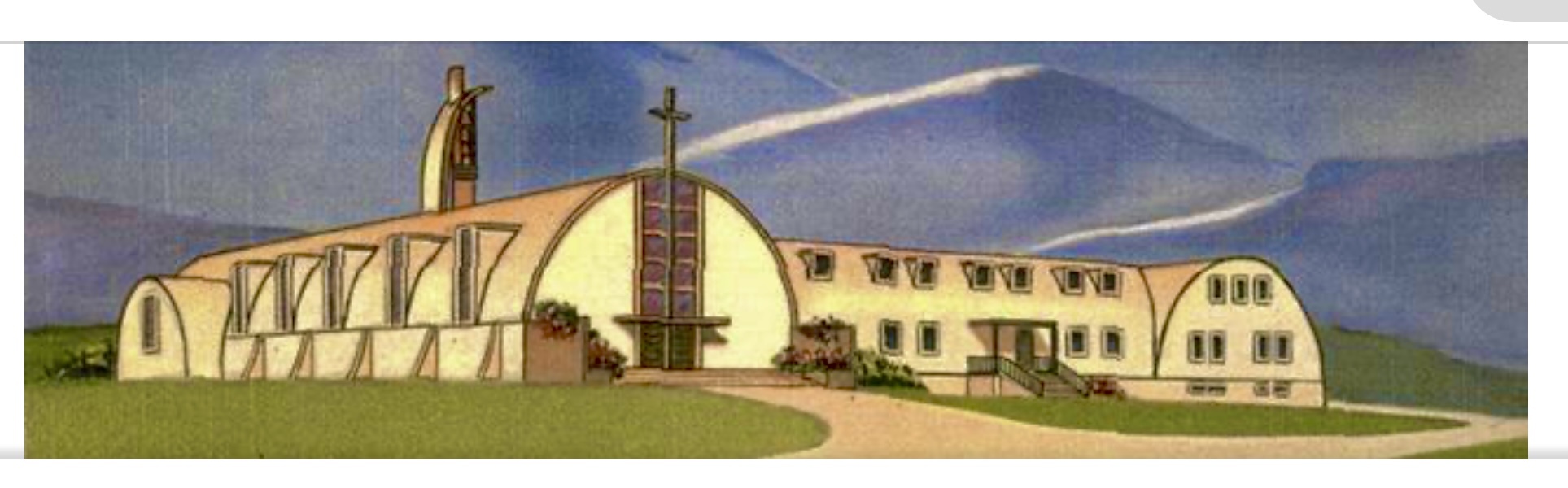
(Editor’s note: this is an abridged excerpt from an unpublished manuscript titled In the Valley of Monks and Saints. The book features stories about the Trappist monks who lived at a now-closed Catholic monastery near Huntsville in rural Northern Utah and the extraordinary friendships the monks developed with their neighbors, including many members of the Church of Jesus Christ of Latter-day Saints. In April 2020, I interviewed Huntsville native Quinn McKay—who died in May 2026 at age 99½—for the book. This article is based on the interview.)
Quinn Gunn McKay spent many years far away from his rural Northern Utah hometown working as a writer, professor, and business executive, and serving as a leader of the Church of Jesus Christ of Latter-day Saints. Some of the most remarkable moments of that long and productive life, however, occurred at the beginning and near the end, when Quinn encountered some Catholic Trappist monks who worked and prayed just a few miles from his family’s farm in Huntsville.
Quinn was born a century ago in 1926, two decades before the monastery started and on the cusp of the Great Depression and the Second World War. His father, James Gunn McKay, died in 1941 while Quinn was a teenager. James’ wife Elizabeth Petersen (“Bessie”) McKay filled in admirably, so well that she was Utah’s Mother of the Year in 1969. Still, Quinn had to grow up quickly. He and his seven siblings had daily chores on the family farm and dairy.
At age 16, Quinn got his driver license, took a job as a truck driver, and spent long hours on the road each day. Bessie was so worried about her son that she sought advice from her Huntsville next-door neighbor (and her husband’s cousin), David O. McKay. At the time, David O. McKay was a Latter-day Saint apostle. A few years later, he was called to serve as church president and prophet. President McKay told Bessie that young Quinn should stop for coffee a couple of times a day. Noting his neighbor’s shock about a recommendation conflicting with church rules, he smiled and said NoDoz would work too.
When World War II erupted, Quinn joined the Marines, fought overseas, and then was called to work as a Latter-day Saint missionary in England. He returned home to Huntsville for several months in 1947 before starting his church service. He was there when Trappist monks started a Catholic monastery just down the road. The monks’ arrival shocked and surprised the Latter-day Saints who dominated the Ogden Valley.
Quinn had strong negative feelings about these strange Catholics who had invaded his hometown. He had been told that the Catholic Church was a false church. One of his teachers was the neighbor who had offered advice on staying awake during long drives—Huntsville native son David O. McKay. McKay thought of Quinn as a beloved nephew and Quinn called him “Uncle Dade.” Speaking at the local Latter-day Saint ward house one Sunday, President McKay strongly warned the Huntsville saints not to go anywhere near the new abbey.
Quinn followed the advice, but it also confused his family. Quinn’s younger brother Barrie McKay was already working on the monastery farm and had met several monks. The previous farm owners had employed Barrie, and those owners agreed to have their workers help the monks harvest their first crops of hay in 1947. Barrie survived his monastic close encounter unscathed and in good humor. He even told Quinn that although he had failed in his quest to get the silent monks to talk, at least he got them to smile at the jokes he told.
During the ensuing years, Quinn spent most of his time away from Huntsville, first for his church mission, then in college (he earned two degrees from Harvard), and then during his long and distinguished academic and business career. For a time, he even lived overseas among Muslims in Northern Nigeria and Buddhists in Burma (now Myanmar). In Rangoon, his Uncle Dade McKay appointed him to serve as the general authority for the Burmese Latter-day Saints. Quinn diligently performed the calling but also admitted there were not many saints there.
Quinn returned to Huntsville often to visit his mother, who lived until 1976, and to see his large and extended family. His time abroad, and among persons with many different faiths, softened his initial antagonism towards other religions. As a result, he again asked President McKay about visiting the Utah monastery a few years before the church leader died in 1970. Uncle Dade’s views had softened too. He told his younger cousin that it was good, and that he should befriend everybody.
President McKay expressed a similar sentiment (through his son Robert, as the president was too sick and unable to attend in person) at the Church’s 1964 general conference. In the opening keynote address, McKay struck an ecumenical tone, “The rising sun can dispel the darkness of night, but it cannot banish the blackness of malice, hatred, bigotry, and selfishness from the hearts of humanity. Happiness and peace will come to earth only as the light of love and human compassion enter the souls of men…This will be accomplished only by a slow but never-failing process of changing men’s mental and spiritual attitude. The ways and habits of the world depend upon the thoughts and soul-convictions of men and women. If, therefore, we would change the world, we must first change people’s thoughts.”
Quinn started visiting the Huntsville monastery, heard the monks chant, and sampled their delicious bread and honey. He also spoke occasionally with Brother Felix McHale, the business agent for the monks who often was out and about in local shops and at the post office. Quinn saw how the Latter-day Saint farmers who owned land close to the monastery got to know the monks first, liked them, and then acted as emissaries to the rest of the Huntsville community. The rest of the saints then modified their feelings and befriended the monks too.
Quinn also noticed a change in attitude among his brothers—a congressman, a federal appeals court judge, and a prominent Utah lawyer—as well as in his other Ogden Valley neighbors. Quinn told me, “The more you interact with people, the stronger your sentiments become. And very often they can be negative sentiments and get worse, but most often, the more you interact with people, the more it moderates and makes your emotions positive.”
Was President McKay ever among those who visited Holy Trinity Abbey? Quinn was not sure but told me he thought it was very possible. His Uncle Dade knew that other Ogden Valley saints had developed close friendships with the monks and did not object. And Quinn reported that at the end of his life, President McKay’s “attitude about the monastery was quite positive, surely nothing hateful or like that.” The monks I knew did not recall a McKay visit to their abbey, but one monk, Father David Altman, remembered that President McKay’s successor—President Harold B. Lee—made a brief visit to the abbey sometime in either 1972 or 1973.
On December 9, 2001, Quinn published an article he co-authored with his Catholic friend, Salt Lake Tribune editor James E. Shelledy. The essay was part of a special newspaper edition called “The Unspoken Divide.” Quinn’s article—titled “What Can I Do Personally?”—offered practical advice to Latter-day Saints, and to those professing other faiths, about bridging the religious divide. One of Quinn’s tips to his fellow saints was: “‘Love thy neighbor as thyself’ does not include the words ‘if they can be converted.’ As St. Francis of Assisi put it: ‘Teach the gospel at all times—and, if necessary, use words.’”
In 2015, Quinn retired and returned to living full-time in Huntsville, during the waning years of the nearby Trappist monastery. Like his Uncle Dade, who often went home to the Ogden Valley as a respite from his church leadership burdens, Quinn returned to his roots too, including farm work, shoe-ing his own horses, and caring for livestock.
David O. McKay’s years as church president included an outreach to other religions. In the late 1950s, President McKay and Utah Catholic Bishop Duane Hunt often candidly discussed their divisions, and as a result became friends. When Hunt died suddenly in 1960, McKay paid unprecedented respect by attending the funeral Mass at Salt Lake’s Cathedral of the Madeleine.
The new Catholic bishop, Joseph Lennox Federal, returned the favor and attended the funeral services in the Salt Lake Tabernacle when McKay died in 1970. As President McKay’s biographers note, when his funeral procession passed the Cathedral of the Madeleine, “on its slow, sad journey along South Temple Street to the Salt Lake City cemetery, [Bishop Federal] ordered its bells tolled in a final demonstration of respect.” The Catholic cathedral bells have tolled for the funeral cortege of every other Church president leader since then.
Quinn experienced his own rather ecumenical procession too. He was a skilled horseman with a lovely black and red surrey, so Ogden Valley event organizers often asked him to drive dignitaries during civic events. In 2017, about a month before the monastery closed, Huntsville’s town leaders asked Quinn to transport the Grand Marshals of the annual July 4th parade—three monks from Holy Trinity Abbey. He readily agreed and prepared the rig.
On that Independence Day morning, Quinn—himself over age 90—drove three monks of comparable age around Huntsville’s central park and business district. As the horses trotted on the parade route, Quinn chatted with Father Patrick Boyle, who sat by him in the front of the surrey wearing his black and white monk robes and a red, white, and blue patriotic baseball cap. Father Patrick, a St. Louis native, told Quinn he had arrived in Huntsville in 1950 and lived at (and rarely left) the monastery for the next 67 years. Quinn was stunned—this mirrored the entire time Quinn had lived and worked away from Huntsville.
As Quinn drove on, skillfully managing the horse reins and elated by the many ovations his fellow Ogden Valley residents gave the monks, he told me he suddenly felt quite warm. The temperature change, however, was not due to the typical mid-summer heat. Instead, it was an organic byproduct of the kinetic spirit rising up as the saints and the monks cherished and celebrated— together and one last time—the amazing evolution that came to pass during the lives of the four old men in that surrey.
When the parade ended, the man whose uncle had once advised him to avoid monks altogether, shook hands with and bade farewell to three of them with whom he had spent the memorable morning. Quinn said he had only one thought, “These are our neighbors and we’re all God’s children.”
***
Sources:
Unless otherwise noted, the fact and background information about the McKay family and their interactions with the monks in this chapter is from a variety of sources, including:
– Quinn McKay, interview by Michael Patrick O’Brien, April 11, 2020, transcript and recording in possession of the author
– “Quinn G. McKay,” Wikipedia, accessed March 2, 2020,
– “Quinn G. McKay,” Mormon Wiki, accessed March 4, 2020,
– “Weber Pioneer, Aged 87 Dies,” Ogden Standard Examiner, January 14, 1926
– “James G. M’Kay Dies at age 60.” Ogden Standard-Examiner, September 21, 1941
– R. Scott Lloyd, “Respect for rights guides career,” Church News, October 19, 1991
– Jerry Johnston, “McKay had ‘common touch,’” Deseret News, October 11, 2000.
– David O. McKay, “Peace Built Upon the Solid Foundation of Eternal Principles,” October 2, 1964, accessed April 16, 2020, at Improvement Era, Dec. 1964, 1041-1042 or Conference Report, Oct. 1964, 4-6, found here.
– Gregory A. Prince and Gary Topping, “A Turbulent Coexistence: Duane Hunt, David O. McKay, and a Quarter Century of Catholic-Mormon Relations,” Journal of Mormon History 31 (Spring 2005): 142-63.
– Gregory A. Prince and Wm. Robert Wright, David O. McKay and the Rise of Modern Mormonism (Salt Lake City: University of Utah Press, 2005) 112-126.
*Mike O’Brien (author website here) is a writer and attorney living in Salt Lake City, Utah. Paraclete Press published his book Monastery Mornings, about growing up with the monks at the old Trappist monastery in Huntsville, Utah, in August 2021. The League of Utah Writers chose it as the best non-fiction book of 2022. Mike’s new holiday novel, tentatively titled “The Merry Matchmaker Monks,” will be published in time for Christmas 2026.
