
By Michael Patrick O’Brien–

It’s sad but seems true—Trappist monasteries don’t last longer than 70 years in the Rocky Mountains.
To be fair, there have been only two—Holy Trinity Abbey in Huntsville Utah from 1947 to 2017, and St. Benedict’s Abbey in Snowmass, Colorado, which opened in 1956 and closed in January 2026.
The Huntsville monastery was my boyhood home away from home. I tell that story in my 2021 book about the monks called Monastery Mornings.
I was at Holy Trinity Abbey in the 1970s when I first heard about Snowmass. We were monastic newbies back then, just learning about monks and monasteries and their own special language.
I describe that moment in Monastery Mornings: “Another good example of our ignorance of the monk code is what I call the ‘Snow Mass’ incident. We heard the monks refer a number of times to a ‘snow Mass.’ I assumed this was something like a folk Mass, only said outdoors and in bad weather. My preteen brain imagined a priest in boots and parka, a frozen altar, the offertory gifts arriving on skis, and shivering but loyal worshippers in the congregation. I must not have been the only one confused, because one day my sister Karen asked one of the monks about the snow Mass. At first, he looked confused, but then he smiled and suggested that what we had heard was a reference to ‘Snowmass,’ i.e. the nickname for St. Benedict’s Monastery, another Trappist community high in the Rocky Mountains in Snowmass, an unincorporated community in Colorado.”
One of my few regrets during my lifelong association with Trappist monks is that I’ve never visited St. Benedict’s monastery while it was open. And sadly, now I never will.
The property was sold in December 2025. The last Trappist Mass at Snowmass is Sunday, January 11, 2026.
In 1950, Trappist monks started the Snowmass motherhouse, St. Joseph’s Abbey in Spencer, near Worcester, Massachusetts. Fourteen years later in 1964, the Spencer monks founded St. Benedict’s Abbey in Snowmass, about 18 miles northwest of Aspen.
Like all Trappist monasteries, the Snowmass abbey left its loving and benevolent mark on the surrounding community.
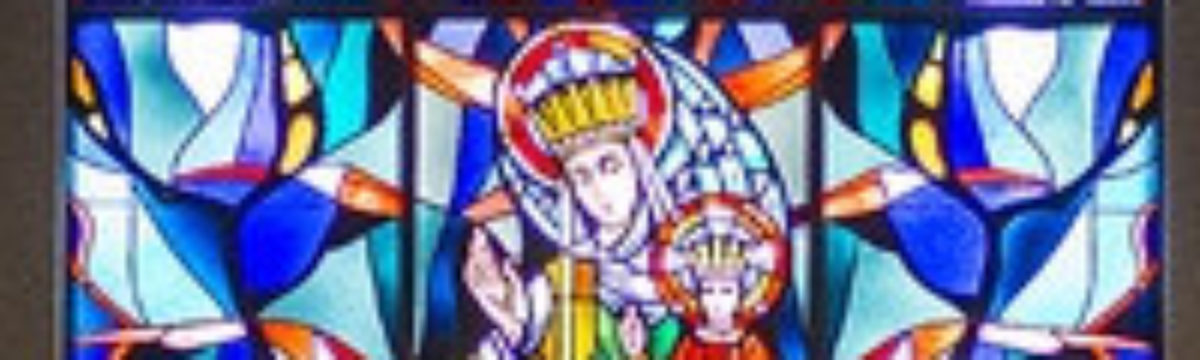
Famous Kentucky monk/writer Thomas Merton once prepared a booklet about the place, called “Come to the Mountain.” Merton noted, “In a world of noise, confusion, and conflict it is necessary that there be places of silence, inner discipline, and peace.” (The photo with this blog was used as the booklet cover.)
Beloved spiritual leaders like Father Thomas Keating and Father Joseph Boyle are buried on a slope just above the old Snowmass monastery, under the protective shadow of a towering cross.
Keating helped develop centering prayer. His fellow Trappist Father M. Basil Pennington has described its four basic steps:
- Sit comfortably with your eyes closed, relax, and quiet yourself. Be in love and faith to God.
- Choose a sacred word that best supports your sincere intention to be in the Lord’s presence and open to His divine action within you.
- Let that word be gently present as your symbol of your sincere intention to be in the Lord’s presence and open to His divine action within you.
- Whenever you become aware of anything (thoughts, feelings, perceptions, images, associations, etc.), simply return to your sacred word, your anchor.
Keating emphasized that practitioners should “[let] go of every kind of thought during [centering] prayer, even the most devout thoughts.”
His protege Boyle was “a gentle and loving Father Abbot to the monastic community and a loving and generous pastoral servant to the many retreatants and friends of the monastery. He made major enhancements to the monastery, adding a retreat house in 1995, an infirmary wing and community meeting area in 2000, and the latest environmental project of a solar energy field that will provide clean electricity for many years to come.”
Just shy of the monastery’s 70th anniversary, St. Benedict’s closed, a few years after the monks shuttered their beautiful retreat center and bookstore in 2023. Like almost all of the American Trappist monasteries these days, Snowmass struggled in recent years with aging monks and a dwindling membership.
It’s a big loss.
In his book Monastic Practices, Utah monk Father Charles Cummings wrote, “In our contemporary age of fast-moving, fragmented, driven, overstimulated, pleasure-and-profit seekers, the witness of a stable, peaceful monastic community is likely to attract visitors who find themselves by pausing for a time to share the monastic tranquility and prayerfulness. When they leave, they may carry with them a resolution to live a more God-centered life themselves. In this way, the monastery gradually has a stabilizing influence on the surrounding society, like leaven in the dough that permeates and transforms everything that comes into contact with it.” (Monastic Practices, Liturgical Press 2015, p. 187)
Besides mourning the departure of the beloved monks, the local community has worried about what will happen to the pristine land for which the monks cared. The property consists of some 3,700 sparsely developed acres.
In 2024, the monks put it up for sale with a listing price of $150 million. The realtors, framing the listing as a “once in a generation offering,” said they were looking for a conservation-minded buyer, given the monastery’s ecological values and the strict local land use code in place.
One sale fell through. The monks finally sold the land in December 2025 for $120 million.
Reports say the new owner is 58-year-old Alex Karp, the co-founder and CEO of Palantir, a data analysis firm that works with U.S. military and intelligence agencies. Bloomberg has estimated Karp’s net worth at about $18 billion.
News accounts say Karp will use the property as a private residence. He is known as an avid cross-country skier.
The sale requires approval by the Vatican’s Dicastery for Institutes of Consecrated Life and Societies of Apostolic Life, but it is yet not clear if that has happened. If the past is prologue, the monks will dedicate a substantial part of the sales process to both local and international charity, and towards helping support other Trappist abbeys around the world.
There is a stark contrast between a billionaire’s playground and a monastery where kind and humble monks once prayed for the world and helped the poor. Yet, it probably could have been a lot worse, and at least (apparently) the land will stay open and pristine—St. Benedict’s Abbey might have become St. Benedict’s golf course and luxury subdivision.
Still, as a new year dawns in what has become an angry and troubled world, I cannot help but feel a little sad about the demise of the old Snowmass monastery.
Another good and sacred thing has melted away.
*Mike O’Brien (author website here) is a writer and attorney living in Salt Lake City, Utah. Paraclete Press published his book Monastery Mornings, about growing up with the monks at the old Trappist monastery in Huntsville, Utah, in August 2021. The League of Utah Writers chose it as the best non-fiction book of 2022. Mike’s new holiday novel, tentatively titled “The Merry Matchmaker Monks,” will be published in time for Christmas 2026.
