
By Michael Patrick O’Brien–

In 1949, a New York City lawyer named Porter R. Chandler offered some farm land in northwestern New York State to Kentucky’s Gethsemani Abbey. The constitutional law expert hoped the monks would start a new Trappist monastery there.
The high-powered lawyer served as chairman of the New York City Board of Higher Education and was the son of an American Navy admiral. Chandler also was a devout Catholic and had grown up on a nearby farm.
During the previous five years, Gethsemani Abbey had started new monasteries in Georgia, South Carolina, and near Huntsville in rural Northern Utah. Abbot James Fox decided to start one more, and so the Kentucky monk accepted Chandler’s generous proposal.
In 1951, Fox sent three dozen men to build a new Trappist abbey in Livingston County, about halfway between Buffalo and Rochester. The county is named for Robert R. Livingston, who helped draft the Declaration of Independence and negotiated the Louisiana Purchase.
The New York monks eventually would own 2,400 acres of farm and forest lands on the western banks of the Genesee River, which flows 160 miles from the hills of northern Pennsylvania and empties into Lake Ontario. In the language of the native Haudenosaunee people, “Ge-ne-see” means “pleasant banks.”
Trappist Father Gerard McGinley led the Gethsemani monks to their new home along those pleasant banks. He also had played an active role in starting Holy Trinity Abbey in Northern Utah where I grew up.
A few years earlier, Father Gerard wrote and told his sister, a Benedictine nun, about the monks’ expansion plans. Sister Myron McGinley wrote back and suggested they locate the monastery in Utah where she was working in a hospital.
The Genesee monks lived with Porter Chandler and his wife Gabrielle at their “Westerly” home, while constructing their first monastic residence. The historic estate near the town of Piffard was built in 1850 and had been the home of United States President John Tyler’s daughter.
Although Father Gerard passed away unexpectedly in 1955, Porter Chandler supported the new abbey until he died in 1979 and often could be seen shuffling into the monastery church to pray. Porter and his wife Gabrielle are buried in the abbey cemetery near Father Gerard.

Like all good Trappists, the Genesee monks center their lives on ora et labora, which is Latin for prayer and work.
Although they farmed for many years, the monks now have leased out much of their agricultural land. Most of their labor today involves baking the popular Monks’ Bread products, sold at the abbey store and in local supermarkets.
Brother Sylvester (Thomas Patrick) McCormick—a short and scrappy former Golden Gloves prizefighter—began making the bread in 1953 using recipes he learned while cooking on Navy ships during World War II. Soon the bread was so popular that the Genesee monks started selling it to the public too.
The monks’ bakery produces several varieties of bread each week, including white, whole wheat, rye, raisin, and even seasonal breads. The monks make biscotti as well as fruit and nut bars, and sell products from other Trappist monasteries.
Over the years, the Genesee monks also devoted their labors to starting and supporting three “daughter houses” or new monasteries. Two of them are in Nigeria, and one is in Brazil.
The abbey has inspired some thoughtful literary work too.
In the mid-1970s, Genesee’s abbot John Eudes Bamberger—a medical doctor and student of Thomas Merton—allowed the Dutch priest and scholar/writer Henri Nouwen to live with the New York monks for several months.
In 1976, Nouwen published The Genesee Diary—Report from a Trappist Monastery. Even today, almost fifty years later, the book is considered a fundamental work about Trappist spirituality and contemplative life.
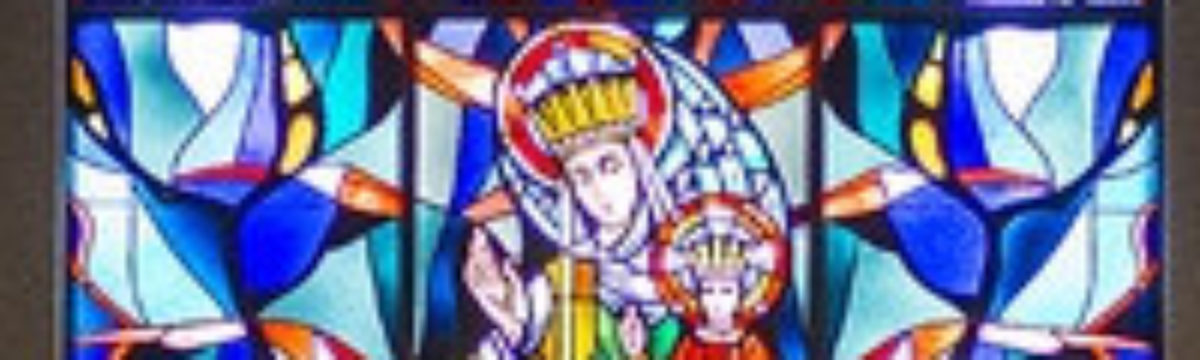
Although they work hard, the monks pray hard too, mostly in a beautiful triangular church dating back a half century and featuring wooden ceilings, stone walls, and stained glass. Genesee monks collected the building’s stones from the abbey property.
Abbot John Eudes led the effort to construct it in the 1970s. The current abbot—Fr. Gerard D’Souza—spearheaded a recent effort to renovate it.
We spent many peaceful moments there during a 2025 visit to Genesee Abbey. We went to see my old friend Brother David Baumbach, a long-time Huntsville monk who transferred to the New York monastery just before the Utah abbey closed in 2017.
Brother David was born in California and, after a few years in the United States Air Force, joined the Huntsville monastery where he took final vows (as “Brother Lawrence”) in 1979. My book Monastery Mornings describes the ceremony, which I watched with great interest as a teen.
Utah knew David as the “Honey Monk” because he oversaw a wildly successful creamed honey mail order business from the Huntsville abbey. And he helped shut it all down when the business of selling honey got in the way of the business of being a monk.
In 2008 he told an Associated Press news reporter, “We were selling so much honey we couldn’t keep up with it, and I realized we were becoming a three-ring circus. I said, ‘Stop right there. We’re here to serve God, not the Almighty dollar.’”
David is such a devoted monk that when the Huntsville monastery’s last abbot—Father David Altman—was elected leader, he chose David as his prior, or second in command. Ironically, now Brother David and Father David are the last two Utah monks standing.
Thanks to Brother David, we stayed in the monastery’s Bethany retreat house. Built some 200 years ago, this stunning and recently renovated cobblestone “monk mansion” is nestled in a spacious and shaded yard.
The house features a fully equipped kitchen, dining room, two spacious living rooms, sunroom, and lots of bedrooms and bathrooms on three floors. The stones for the house were collected from the nearby Salt Creek.
The same peaceful and calm feeling I loved at my Utah abbey pervades Genesee Abbey too.
Our reward for attending the monks’ early morning lauds chant was a spectacular sunrise that cloaked the monastery in graceful light. And Father Justin’s homily at Mass afterwards reminded me why monks are such endearing creatures.
Speaking about a Gospel reading that contrasts self-exaltation and modesty, he gently reminded his fellow Trappists that they are not beyond such temptations: “[O]n feast days, we may see if we can get to the dessert table sooner than others and grab the largest piece there.” Urging his brothers to serve rather than seek honor, Father Justin also recalled the memorable words of another monk as he did the dishes… “Ours is not to reason why, ours is but to wash and dry.”
Father Justin ended with these pearls of wisdom: “Let’s take this to heart with a sense of humor. We’re not perfect; we’re a community of learners, occasionally tripping over our own egos. But Jesus invites us to laugh at ourselves, pick up our cross, and keep on serving…May we live humbly, serve joyfully, and grow in the love that makes us true disciples.”
Amen!
*Mike O’Brien (author website here) is a writer and attorney living in Salt Lake City, Utah. Paraclete Press published his book Monastery Mornings, about growing up with the monks at the old Trappist monastery in Huntsville, Utah, in August 2021. The League of Utah Writers chose it as the best non-fiction book of 2022. Mike’s new holiday novel, tentatively titled “The Merry Matchmaker Monks,” will be published in time for Christmas 2026.
